Rentré

Wednesday, September 1st, 2010 - Nicholas Calcott


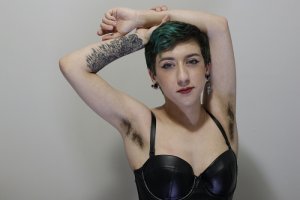
© Melanie Bonajo

It’s the rentré here in France – everyone’s getting back from vacations and jump straight into work.  So, back to the blog.

I wasn’t completely idle over the summer, though. I manage to write a short essay for Le Bal (WHICH OPENS SEPTEMBER 18th, BY THE WAY) on the New Weird.  I urge you to read it:

Obviously, this kind of work has long had a history in the art world – Art world critics, curators, and collectors have long had a much easier time with a work as an independent expression of an idea than has the photography world. The photo world has always had an implicit belief in the photograph as an authentic document that, though not necessarily a conveyer of truth, is the medium for authentic communication between creator and viewer. New Weird photography frequently claims to be nothing more than an assembly of symbols and juxtapositions and that it can be nothing more than some king of photographic Rorschach ink blot to the viewer’s predispositions and prejudices.

More here. This essay, in its current form, is unfinished – I’m interested in expanding upon it, so any comments or input is appreciated.

Others were also not idle – which I’ll get to as I catch up on my linkage.  To start, though, here’s a call for entries from 3/3.  12th Press will be submitting;  You should too.

Little big press  exhibition aims to survey the tendencies that, during the last few years, changed thoroughly the world of photobook publishings.

A more and more increasing vitality is directing photobook evolution towards an independent, self published and scale reduced position, giving life to independent photobooks or fanzines, while small publishing houses are becoming more and more active and prolific all around the world.

Apply at treterzi.org.

Vacation

Friday, July 30th, 2010 - Nicholas Calcott


Taryn Simon, ‘Steroids (illegal)’, from Contraband

So, contrary to appearances, this blog is not moribund – I’ve just been busy. Really, really busy. I’m back now, but off again on vacation until the end of August. I hope to see you then, but in the meantime, check out this Taryn Simon project, Contraband, published in the NY Times.

The photo of the confiscated goods at JFK in an American Index of the Hidden and Unfamiliar was always my favorite, tied with the photo of the Hoh Rainforest, which is where I happen to be going.

Enjoy the rest of summer!

Film + Flash

Sunday, June 13th, 2010 - Nicholas Calcott


Image courtesy of Mus-Mus

I received a new call for submissions from mus-mus, which I’m happy to pass on:

Team mus-mus is looking for your help with an archive that will let us all see film and flash products that we’re bidding au revoir, leaving behind, or perhaps still clinging desperately to. Since George Eastman first invented an emulsion coating machine to mass-produce photographic dry plates in 1879, commercially available photography technology has been a sustaining feature of the photographer’s practice. As old technologies are increasingly falling away and sometimes re-emerging in new ‘skins’, it will be interesting to take a collective worldwide snapshot of what’s on hand in studios (and maybe flea markets) now that are gone from stores or will be tomorrow.

See details and submit here.  I have too many things to submit…

Seeing colors

Monday, June 7th, 2010 - Nicholas Calcott


From the phenomenal site Information is Beautiful.  Click for full size.

Reading the gem of a text that Photography Prison dug up from a Lester Morrison interview on 5b4 that I somehow missed…

In my sophomore year I started doing psychedelics in a rather serious way. Some friends got hold of a bunch of Sandoz tabs. Sandoz was the only pharmaceutical outfit ever to produce pure lysergic acid diethylamide-25 and ergotamine in a form that looked like Pop-Rocks. Ergotamine comes from a fungal rust that grows on certain cereal grains. In high doses can cause vascular stasis, thrombosis and gangrene. That’s how my buddy Ben lost his foot and resulted in me having extreme panic attacks that forced me to drop out of school. Well, that and the foul cholera episode. When it isn’t turning you into a leper, the ergotamine slots so perfectly into the complex serotonin metabolism of the primate cortex. Brings about some random stochastic happenstance, some entropic slippage where – although you have the taste of cat piss in your mouth – you also find yourself trying to poke out the eyes of god. The morning after my first trip, I finally understood colors.

… Brings to mind the color wheel you see above and also Albert Kahn.

In other news, I’m currently engaged in a book project with a photographer who learned to shoot in the 60s – It’s in b+w, but it really gives me a tremendous idea of how printing preferences have shifted over the years.  That is to say that, to a certain extent, you can judge when an image was printed by the particular balance of contrast and density that seems to shift through the decades as printing fashions (!) ebb and flow…

Print Sale

Wednesday, May 26th, 2010 - Nicholas Calcott


Grégoire Pujade-Lauraine

I’ve been a bit busy lately, hence not alot of posting, but I’m collecting things to show you all, so rest assured that I haven’t given up.

In the meantime, though, check out the work of my friends Carly Steinbrunn, Véronique Besnard, and Grégoire Pujade-Lauraine. And, more importantly, visit the page of the Le Garage print sale on Grégoire’s site – it’s to support the running costs of the Le Garage project, which is really shaping up to be great, so don’t forget to submit your book dummies, due May 31st!

Le Garage

Thursday, April 22nd, 2010 - Nicholas Calcott

So, I’m happy to announce a call for submissions for Le Garage, “an itinerant exhibition project born out of a common love for photography-related books and publications.”

In actual fact, Le Garage will be an exhibition of photobook dummies by both known and unknown photographers, held off-program at the opening week (10 days, actually) of this year’s Les Rencontres d’Arles photography festival. I’ll let you all check out the details on the website, but I will say that it promises to be alot of fun and good exposure too – Arles is always jam packed with photographers and photography lovers that week, and I can promise you that we’ll be putting together an exhibition that will attract them all (or at least the good ones)…

More details later as the project comes together.

Scanning

Tuesday, April 20th, 2010 - Nicholas Calcott

I’ve got a big scanning job this week, so I’ll keep it short, but I just wanted to pass on the 3 images you find in this post.  They’re part of a larger archive of found photographs, collected here in Paris that are actually what I’m in the process of digitizing.  And I probably shouldn’t pass this on, but they’re just so cool.

I’m sure you all have seen plenty of mugshots, so this won’t be too revealing…  But check out the text on the back of the images (reproduced below each photograph – click for full size images).  It’s really fascinating.  I especially like the descriptions of tattoos, none of which are visible in the actual photographs, but reveal a world apart from that reproduced by photography.  My mind is going wild imagining into being what these tattoos could look like beneath the dark jackets and pin striped suits.

  • Pete Brook
  • Nick. Whoooa! These are really cool. Washington State Reformatory is the prison in which I volunteer teach. It’s in Monroe about 40 minutes from Seattle.

    In fact, tomorrow is the 100th anniversary of the institution. It is the second oldest prison in Washington.

    I’m going to be badgering you for follow ups and delivery of an awesome project to the wider web world!

    I wonder how the mugshots got to Paris?

  • Nicholas Calcott
  • Weird coincidence – I figured these would be of interest to you, Pete, but I never made the connection to the Washington State Reformatory in Monroe.

    As far as the broader collection, the rest of the work isn’t mugshots, but rather a much broader collection of other found photos. I’m going to do my best to get the project out, but as I said in the post, I probably shouldn’t even have posted these as I’m not even sure how public they want the work to be.

    As far as how they got to Paris, your guess is as good as mine, though I imagine these were widely handed out at the time, and they’ve probably made their way all over the place. I love also that the text is handwritten on the back of two of them – I guess, though, that this was common enough, or widely distributed enough, to necessitate actually printing on the back of the cards..


ADD A COMMENT »

Recent Archives

Thursday, April 15th, 2010 - Nicholas Calcott


Women in bathing suit…
‘, from the University of Washington Flickr stream

Or rather, archives that I’ve recently come across.

The University of Washington continues to post selections from their archives on Flickr – They’re mostly photos of leisure activities in the North West in the 10s, 20s, and 30s (with alot of skiing and winter sports), but there are definitely some real gems, like the photo featured above. It makes me miss Washington State, actually.

Also, the London School of Economics has a kind-of-wonderful Flickr set from the 80s thats worth a browse if you like nerds. [via Photography Prison]

Also via Photography Prison, there’s a really really wonderful archive of African American photographs from the 1900 Paris Exposition.  In addition, Pete Brook just posted a link to Hidden From History: Unknown New Orleanians with some phenomenally interesting mug shots… And the UK National Archives.

Gerhard Richter also happens to have online 783 sheets of Atlas, his archive of source material that was presented as a fascinating exhibition a few years ago.  I’m usually a bit dubious of collections whose supposed value is conferred upon them by the famous collector, but Atlas is a phenomenally interesting archive.

Photography and Art

Friday, April 9th, 2010 - Nicholas Calcott

So here’s a question that I think gets at what is essential in photography – is photography fundamentally ‘different’ from other forms of representation or is the fact that there is a ‘photography world’ and, for example, this is a ‘photography blog’ just a unique consequence of historical and market forces?

I don’t mean to jump into the debate set off by the Paul Graham essay that recently made the rounds which is essentially arguing for greater photographic inclusion in the art economy. I mean to ask whether there is a reason why we’re all working in, arguing about, and obsessed by this one specific medium and not any other beyond the fact that we happen to find ourselves in it.

Is photography special?

See:
This ancient post
Christopher Rauschenburg on Concientious
Blake Andrews on La Pura Vida
Eyecurious’ take
And, like, the history of writings on photography. People seem to forget this, but Barthes’ and Sontag’s writings on photography were and are still important because their core arguments are that things represented in photography are fundamentally different than things represented in other medias. Does this still ring true, now, when photography is much less an exceptional machine made representation and more part of a general media landscape characterized mostly by its accessibility to anyone regardless of their tools and rather seamless distinctions between mediums?

Also, tangential but unrelated: When are we gonna see an iPad photobook? Will it still count as a photobook?

Also: iPad magazine aps.

More North Korea

Tuesday, April 6th, 2010 - Nicholas Calcott


Noko Jeans
, ‘By Train to Pyongyang’

A brief update on the previous post – right after I published it, I came across a more photographically interesting gallery of North Korea photos taken on a business trip to Pyongyang.  There’s also a small photobook!

It’s short but interesting and brings to mind pictures of the eastern block right after it crumbled; work by Luc Delahaye, Lise Safarti, innumerable others, work that, to some extent, is still being done today.  Can you imagine the tidal wave of photographic coverage if the reclusive regime falls and access opens up to the country…  Tools like North Korea Uncovered, however, lead me to think that this time around coverage would be a bit different.  The former USSR was such an interesting subject because it was so… opaque to Westerners.  I suppose that will, to a certain extent be true in this hypothetical case, but things like the smuggled video cameras in Burma and the limited photographic work already being done in the DPRK make me think that all it would take to radically transform the story from a fingerpointing look-what-sorry-state-this-country-is-in to a much more nuanced and interesting view is a couple dozen digital cameras given to people who have likely never known that such tools even existed…